
10 Amazing Ways Fungi Support Healthy Forest Ecosystems
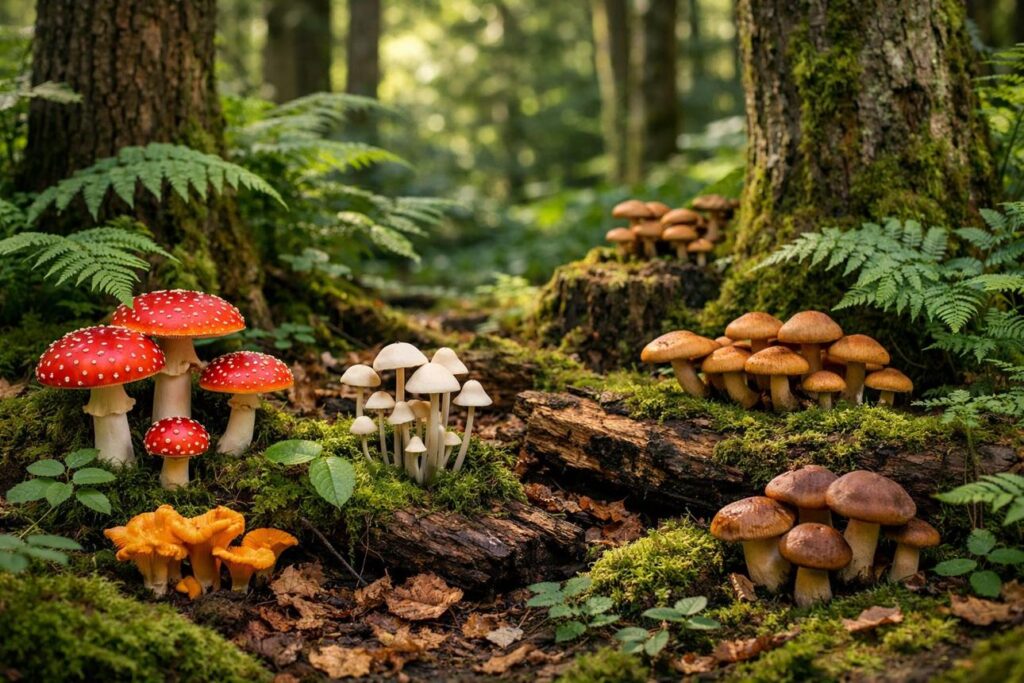
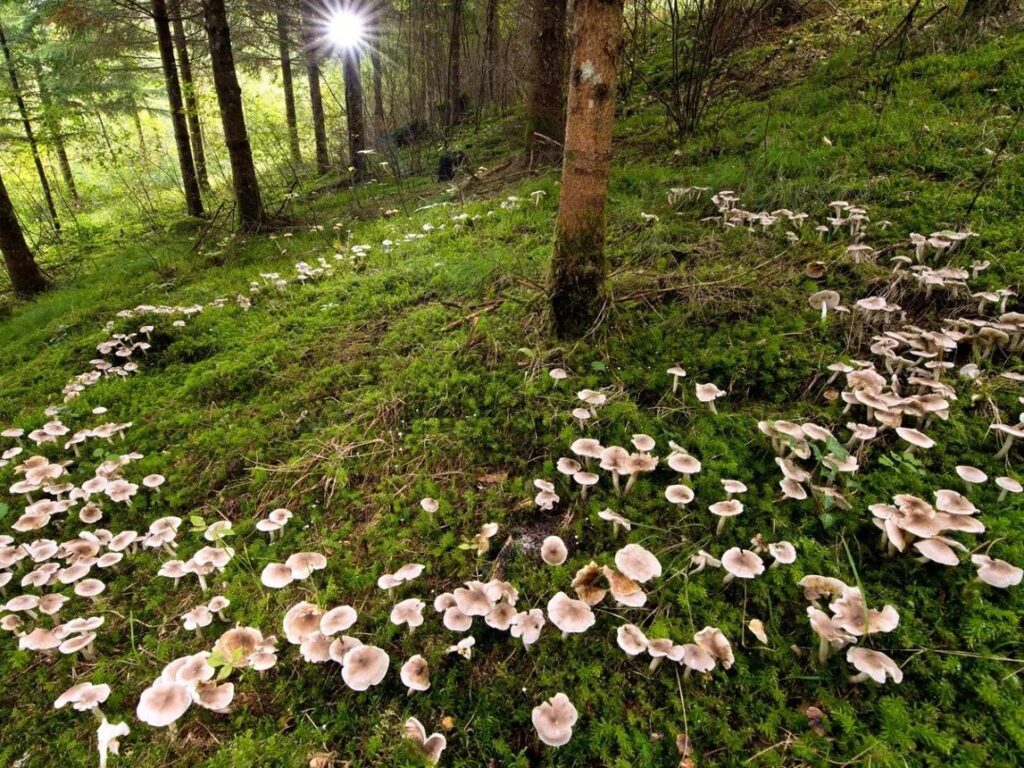
Forests are among the most diverse and productive ecosystems on Earth, supporting countless species of plants, animals, fungi, and microorganisms. While towering trees often receive the most attention, fungi quietly perform many of the essential functions that keep forests healthy and resilient. Without fungi, forests would struggle to recycle nutrients, maintain fertile soils, and support the incredible biodiversity that makes these ecosystems thrive.
Understanding how fungi support healthy forest ecosystems provides valuable insight into the interconnected relationships that sustain life in nature. These remarkable organisms act as decomposers, nutrient recyclers, and partners with plants, making them indispensable to the long-term health of woodland environments.
If you are new to fungal science, begin with our guide on What Is Mycology?, which introduces the fascinating world of fungi and their importance to ecosystems. What Is Mycology?
Why Forest Ecosystems Depend on Fungi
A forest is much more than a collection of trees. It is a complex living network where organisms constantly interact and support one another. Fungi are at the centre of many of these interactions, helping forests remain productive and balanced.
From the forest floor to the roots of towering trees, fungal networks influence how nutrients move, how plants grow, and how ecosystems recover after disturbance. 10 Powerful Ways Fungi Contribute to Nutrient Cycling in Nature
1. Recycling Nutrients Naturally
One of the most important roles fungi play in forests is decomposition.
Dead leaves, branches, fallen trees, and other organic material are broken down by fungi into nutrients that can be reused by plants and microorganisms. This continuous recycling process keeps forests productive year after year.
Learn more about this process in our guide:
10 Powerful Ways Fungi Contribute to Nutrient Cycling in Nature
2. Supporting Tree Growth
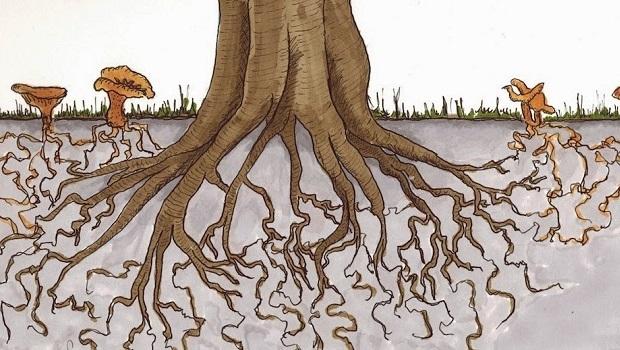
Many forest trees form beneficial relationships with fungi through mycorrhizal partnerships.
These partnerships allow trees to absorb water and nutrients more efficiently while providing fungi with carbohydrates produced during photosynthesis.
This mutually beneficial relationship strengthens both organisms. 7 Amazing Ways Mycorrhizal Relationships Help Plants Thrive
3. Improving Soil Health
Healthy forest soils are rich in fungal activity.
Fungal networks improve soil structure, increase water retention, and help maintain a stable environment where plants and microorganisms can thrive.
Strong soil health contributes directly to healthier forests.
4. Encouraging Biodiversity
Forests support an extraordinary variety of life.
Fungi create habitats, recycle nutrients, and provide food sources that benefit insects, mammals, birds, and countless microorganisms.
Their presence helps maintain balanced ecosystems with high biodiversity. 10 Common Types of Fungi Found Around the World
5. Connecting Forest Plants
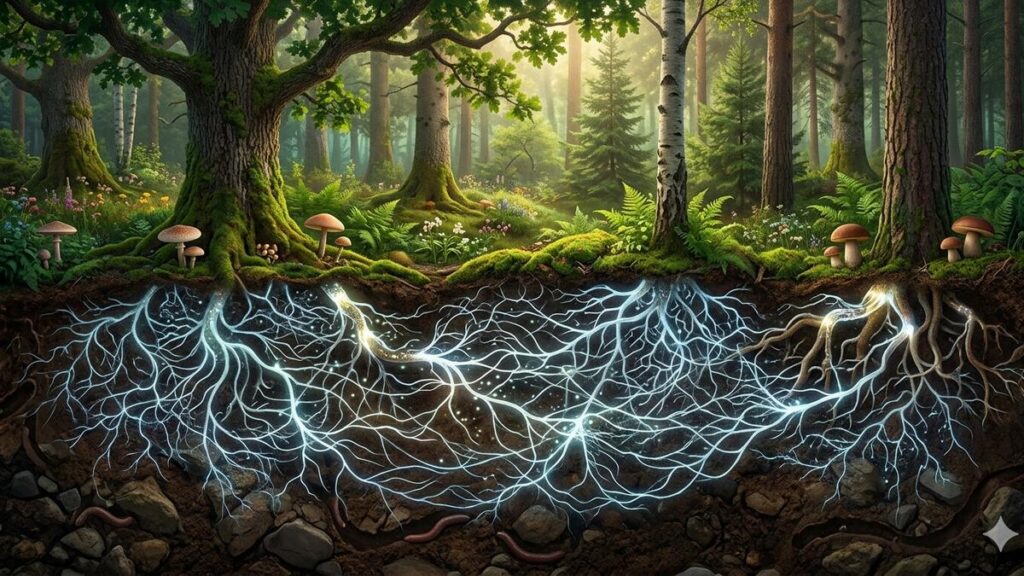
Beneath the forest floor lies an intricate network of fungal threads known as mycelium.
These underground networks connect plant roots and facilitate the movement of water and nutrients throughout the ecosystem.
Scientists continue to study these networks to better understand how forests function as interconnected communities. The Life Cycle of Fungi Explained
6. Supporting Natural Regeneration
After storms, fires, or other natural disturbances, fungi help forests recover by recycling nutrients and improving soil conditions.
This creates favourable environments for new plant growth and long-term ecosystem recovery.
7. Helping Forests Store Carbon
Forests play a vital role in the global carbon cycle, and fungi contribute by breaking down organic material and influencing carbon storage within soils.
Researchers continue to investigate the relationship between fungal communities and long-term carbon dynamics.
8. Protecting Ecosystem Stability
Healthy fungal populations increase the resilience of forest ecosystems.
By supporting nutrient availability, plant growth, and biodiversity, fungi help forests adapt to changing environmental conditions.
9. Supporting Scientific Research
Forest fungi provide valuable opportunities for researchers studying biodiversity, climate change, and ecosystem health.
Their ecological importance makes them one of the most actively studied groups of organisms in environmental science. 9 Important Ways Fungi Support Environmental Research
Explore more in:
9 Important Ways Fungi Support Environmental Research
10. Inspiring Conservation Efforts
As scientists continue discovering the importance of fungi, conservation programmes increasingly recognise the need to protect fungal diversity alongside plants and animals.
Healthy forests depend on healthy fungal communities. 10 Exciting Ways the Future of Mycology Could Transform Science
Frequently Asked Questions
Why are fungi important in forests?
Fungi recycle nutrients, improve soil health, support tree growth, and contribute to biodiversity.
What is mycelium?
Mycelium is the underground network of fungal threads that absorbs nutrients and connects with plant roots.
How do fungi help trees?
Many fungi form mycorrhizal partnerships that improve water and nutrient uptake.
Why is biodiversity important in forests?
Biodiversity helps maintain ecosystem stability, resilience, and productivity.
Conclusion
Fungi are the hidden engineers of healthy forest ecosystems. Through nutrient recycling, soil improvement, biodiversity support, and partnerships with plants, they sustain many of the natural processes that allow forests to flourish. Understanding these remarkable organisms helps us appreciate the complexity of woodland ecosystems and the essential role fungi play in maintaining the natural world.
Continue your learning journey by visiting the Shroom World homepage and exploring our Product Categories for more educational resources. Shroom World
order products directly Shroom World and explore our Product Categories page