The Life Cycle of Fungi Explained: From Spores to Fruiting Bodies
Fungi are among the most fascinating organisms on Earth. They exist in nearly every environment and play an essential role in maintaining ecological balance. Understanding the life cycle of fungi helps researchers, students, and mycology enthusiasts appreciate how these remarkable organisms grow, reproduce, and contribute to ecosystems.
If you are new to fungal science, visit What Is Mycology? to learn more about the field of mycology and its importance in scientific research.
What Are Fungi?
Fungi belong to their own biological kingdom and differ from plants, animals, and bacteria. They obtain nutrients by absorbing organic matter from their surroundings and play a critical role in decomposition and nutrient recycling.
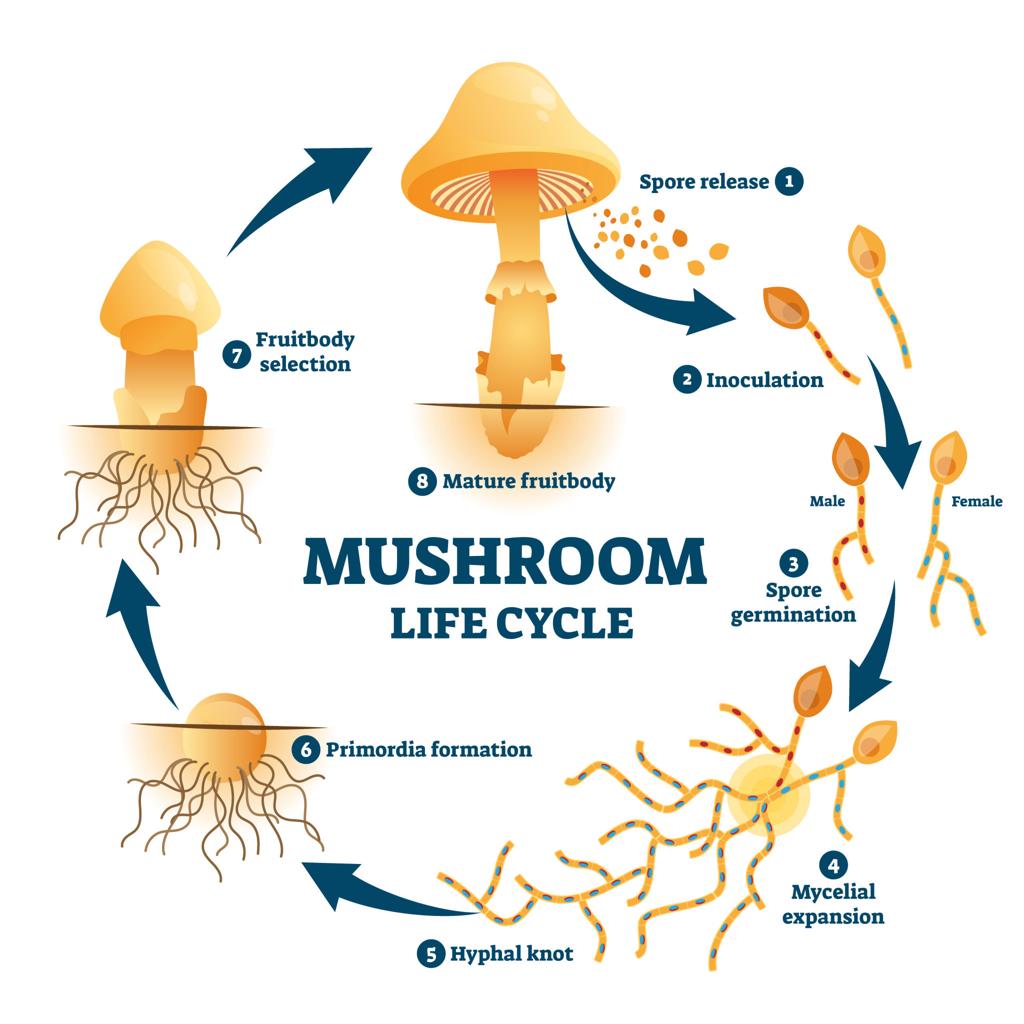
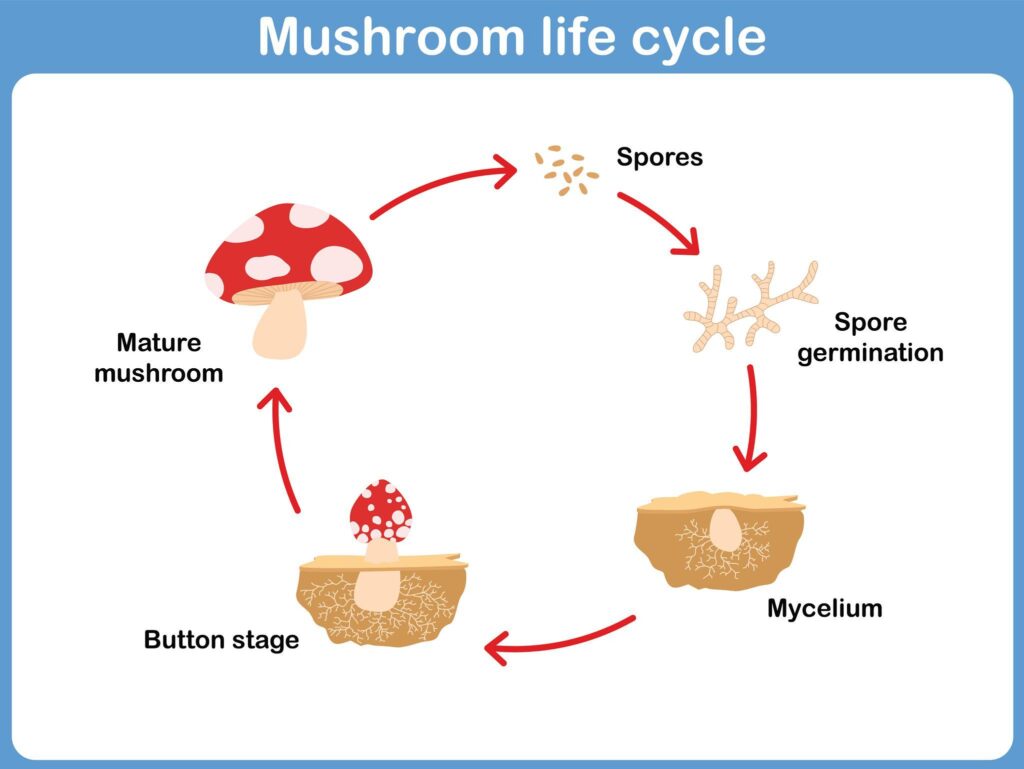
The fungal life cycle involves several stages, including spore production, germination, growth, reproduction, and the development of fruiting bodies.
Stage 1: Spore Production
The life cycle begins with spores. Spores are microscopic reproductive units that allow fungi to spread and colonize new environments.
Fungal spores can be dispersed by:
- Wind
- Water
- Animals
- Human activity
Because spores are lightweight and abundant, they can travel long distances before settling in a suitable environment.
Stage 2: Spore Germination
When spores land in favourable conditions, they begin to germinate.
Factors that influence germination include:
Moisture
Adequate moisture is necessary for fungal growth and development.
Temperature
Different fungal species require different temperature ranges for successful germination.
Nutrient Availability
Organic matter provides the nutrients needed for growth.
During germination, spores develop thread-like structures known as hyphae.
Stage 3: Hyphal Growth
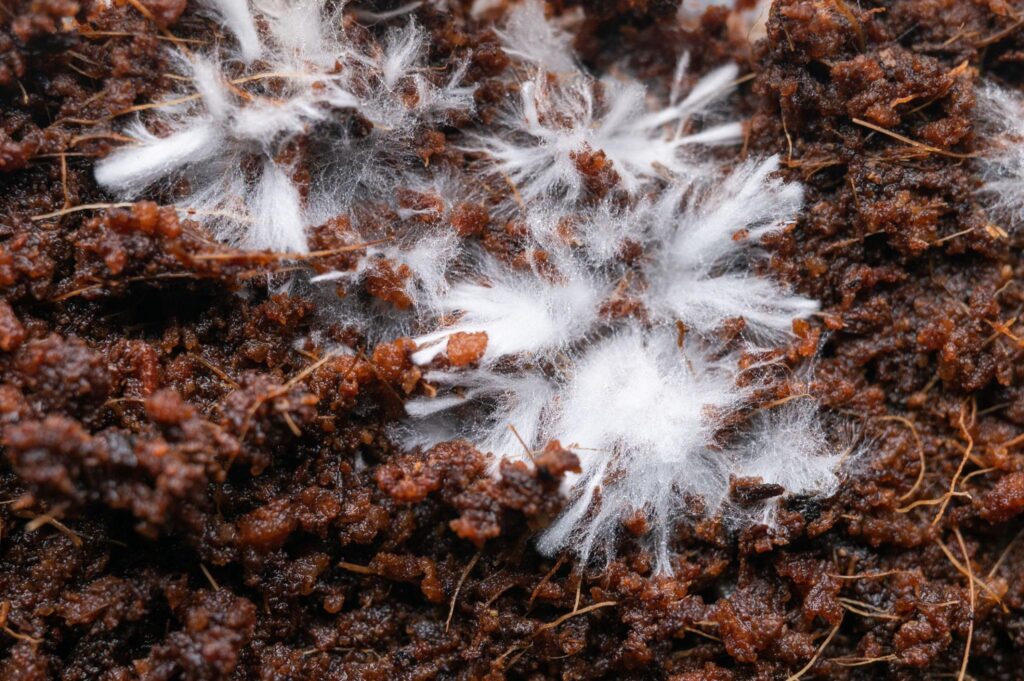
Hyphae are microscopic filaments that extend through the surrounding environment.
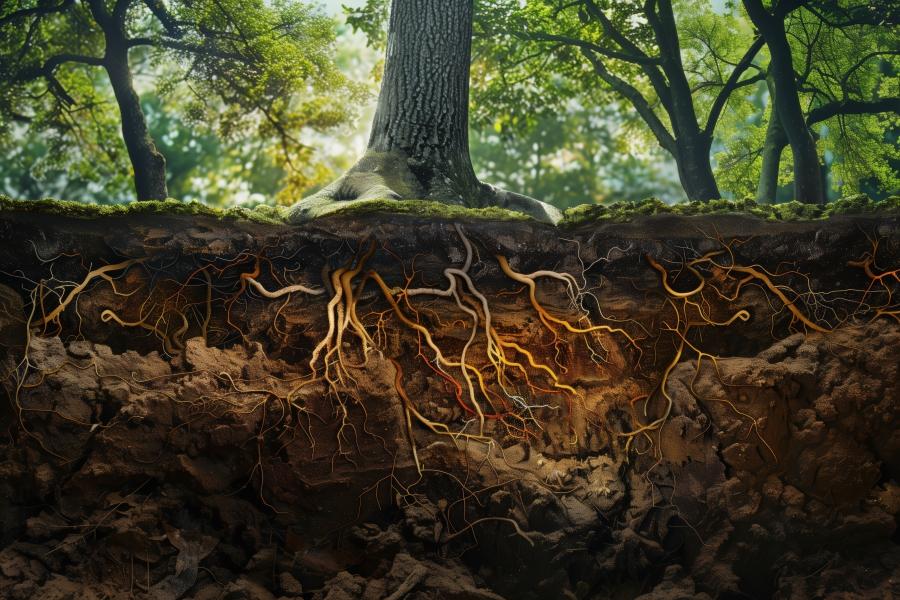
As hyphae continue growing, they form a network called mycelium.
What Is Mycelium?
Mycelium serves as the main body of the fungus and is responsible for absorbing nutrients from the environment.
Many fungal species spend most of their lives in the mycelial stage.
Stage 4: Mycelial Expansion
The mycelium continues to expand and explore new sources of nutrients.
This stage is important because it allows fungi to:
- Decompose organic matter
- Recycle nutrients
- Support soil ecosystems
- Interact with plants and microorganisms
Learn more about fungal ecosystems in our guide to Understanding Fungal Ecology and Its Role in Nature.
Stage 5: Reproduction
Once environmental conditions become suitable, fungi begin the reproductive phase.
Many fungi reproduce through the formation of specialized structures that generate new spores.
This stage ensures the continuation of the species and allows fungi to colonize new habitats.
Stage 6: Fruiting Body Development
Some fungi produce visible fruiting bodies that contain reproductive structures.
These fruiting bodies are designed to release spores into the environment, beginning the life cycle once again.
The development of fruiting bodies depends on several environmental factors, including humidity, temperature, and nutrient availability.
Why the Fungal Life Cycle Matters
Understanding fungal life cycles helps scientists study:
Ecosystem Health
Fungi play an important role in maintaining ecological balance.
Nutrient Recycling
By breaking down organic material, fungi return valuable nutrients to the soil.
Biodiversity
Fungal communities contribute significantly to global biodiversity.
Environmental Research
Researchers use fungi to better understand ecological processes and environmental change.
Frequently Asked Questions
Why are fungal spores important?
Spores allow fungi to reproduce and spread to new environments.
What is mycelium?
Mycelium is the network of hyphae that forms the primary body of many fungal species.
Do all fungi produce fruiting bodies?
No. Some fungi remain microscopic throughout their life cycle.
Why is fungal research important?
Fungal research helps scientists understand ecosystems, biodiversity, and environmental processes.
Conclusion
The life cycle of fungi is a remarkable process that demonstrates the adaptability and importance of these organisms. From microscopic spores to extensive mycelial networks and reproductive structures, fungi contribute significantly to ecosystem health and scientific understanding.
To purchase products, visit Shroom World and browse our Product Categories for more information.